
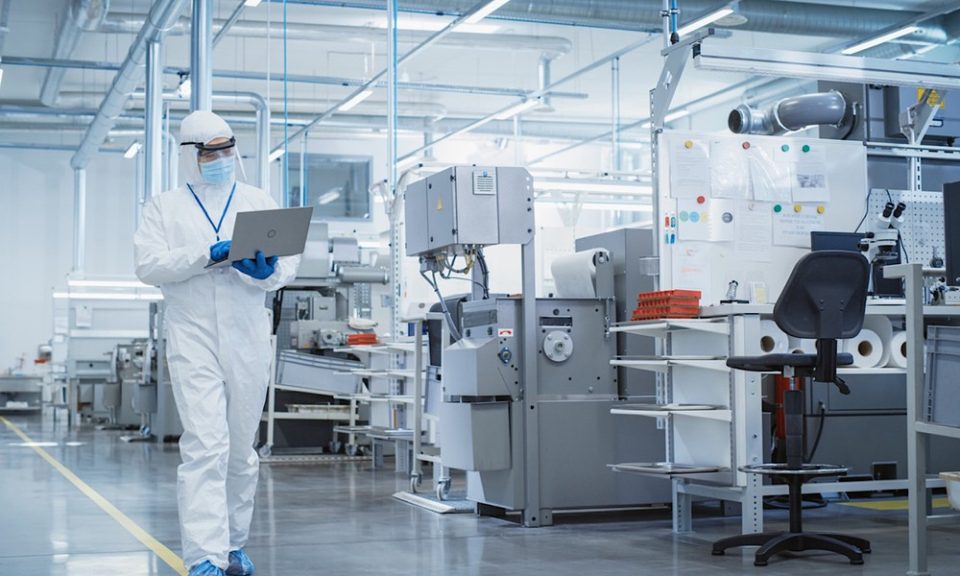
Medical clean room assembly is where the precision of engineering meets the discipline of contamination science, and where the consequences of getting either wrong are measured not in scrap rates or rework costs but in patient outcomes. Every catheter assembled in a classified environment, every implantable component packaged in a controlled space, every diagnostic device built under filtered air and gowned hands arrives at a clinical setting carrying the invisible signature of the conditions in which it was made. Those conditions are not incidental to the device’s safety. They are constitutive of it. Understanding the standards governing medical device cleanroom assembly, and how workflows within those environments must be controlled to meet them, is essential for anyone producing devices intended for use in or on the human body.
The Standards Framework
The standards governing clean room medical device assembly draw from several intersecting frameworks, each addressing a distinct dimension of contamination control and quality management.
ISO 14644-1 establishes the classification system for cleanroom environments. It defines maximum permitted airborne particle concentrations at specified particle sizes, expressed in particles per cubic metre, across a scale from ISO Class 1 to ISO Class 9. For most medical assembly cleanroom operations, ISO Class 7 and Class 8 are the working classifications. Class 7 permits no more than 352,000 particles per cubic metre at 0.5 microns, and is appropriate for the assembly of non-sterile devices, sub-assembly preparation, and packaging operations where contamination must be controlled but direct sterile product exposure to the environment is not occurring. Class 5 applies where it is.
ISO 13485 governs the quality management system within which cleanroom assembly is embedded. It requires documented assembly procedures, validated production methods, component traceability, and a post-market quality system capable of receiving and investigating complaints that may relate to assembly-stage contamination. ISO 14644-2 requires ongoing monitoring and periodic re-qualification of the classified space to confirm it continues to perform as designed.
For facilities supplying the United States market, FDA 21 CFR Part 820 adds requirements for device history records documenting every assembly step, inspection result, and component lot. EU MDR conformity requires that assembly processes be validated and their evidence available for review.
Workflow Control Inside the Cleanroom
The classification a cleanroom achieves is determined not only by its physical infrastructure but by the way work is conducted within it. The best-designed facility will fail to maintain its classification if the operational disciplines governing how people, materials, and equipment move through it are inadequately managed.
Cleanroom assembly workflow control begins with personnel. Human beings are the most significant source of contamination in any classified environment. Skin cells, hair, cosmetics, and respiratory droplets all carry particles and microbial load that a cleanroom is designed to exclude. Gowning procedures covering the body in non-shedding coveralls, hoods, face masks, gloves, and dedicated footwear reduce but do not eliminate that contribution. Residual contamination from personnel is managed by air handling and the behavioural disciplines trained into everyone who works in the space.
Material entry is a second critical control point. Components, packaging materials, and assembly tools entering the classified zone carry surface contamination from outside. Entry protocols typically require wiping with approved cleaning agents, transfer through airlocks, or unpacking from outer layers before introduction to the classified space. Each step is documented and the procedure validated to confirm it achieves adequate decontamination.
Assembly process design matters as much as the environment. The sequence of operations, the tools selected, the surfaces components rest on, the duration of exposure to the cleanroom environment before packaging, all of these influence the contamination burden of the finished device. Medical cleanroom assembly workflows are designed with contamination pathways in mind, minimising unnecessary handling, limiting the time between assembly and sealing, and ensuring that critical component surfaces are protected throughout the process.
Singapore’s Medical Clean Room Assembly Capability
Singapore has developed a well-regarded concentration of medical clean room assembly capability that serves device developers across Asia Pacific, North America, and Europe. Its manufacturers operate ISO-classified assembly environments holding ISO 13485 certification, with quality management systems aligned with FDA and EU MDR requirements, enabling single-site production that satisfies multiple regulatory frameworks simultaneously.
The workforce operating those environments is trained in contamination control discipline to a standard that international audit teams consistently recognise. Singapore’s investment in advanced manufacturing infrastructure, including precision metrology, environmental monitoring systems, and validated sterilisation access, has made it a practical production base for programmes requiring both assembly precision and documented quality system maturity.
The Health Sciences Authority’s regulatory oversight of medical device manufacturing in Singapore provides the national compliance framework within which those assembly operations are conducted and independently verified, giving device developers additional assurance about the regulatory standing of the facilities in their supply chains.
Environmental Monitoring as an Ongoing Discipline
Classifying and operating a medical device clean room is not a one-time achievement. The environment must be continuously monitored and periodically re-qualified to confirm it continues to perform as classified. The monitoring programme covers airborne particle counts at defined locations and intervals, viable microbial monitoring through settle plates and contact plates, differential pressure logging between zones, temperature and humidity recording, and personnel monitoring that attributes viable results to individual operators.
When monitoring data trends toward an alert limit, investigation is required before the limit is breached. When an action limit is reached, production must be assessed and root cause identified and corrected. The programme is the mechanism through which a facility knows, rather than assumes, that its environment is performing as required. That knowledge, built into every shift and every production batch, is what gives medical clean room assembly its clinical credibility.
