
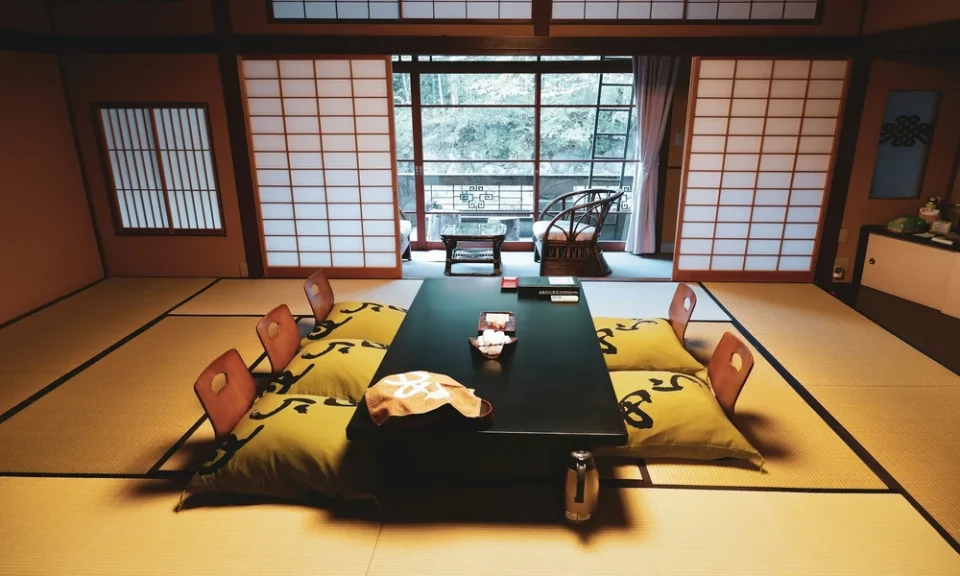
A ryokan is one of those travel experiences that resists adequate description before you’ve had it. The concept – a traditional Japanese inn centered on hospitality, local cuisine, and a particular quality of stillness – is simple enough to explain. What it actually feels like to arrive at one after a day of travel, change into a yukata, sit on a tatami floor with a cup of green tea, and watch the light shift in the garden is something that only accumulates in the experience itself.
What Defines a Ryokan
The word ryokan translates roughly as “travel inn,” but the category spans a wide range from simple family-run guesthouses to elaborately appointed resort properties with private hot spring baths and multi-course kaiseki dinners. What distinguishes any ryokan from a Western-style hotel is less about amenities than about orientation: the experience is designed around slowing down, following the rhythms of the house, and being cared for in a way that is attentive without being intrusive.
Rooms are typically traditional in construction – tatami mat floors, sliding shoji screens, a low table and cushions rather than chairs, a futon laid out on the floor at night by staff. The bed, such as it is, is comfortable and warmer than its simplicity suggests. The absence of furniture creates a particular quality of spaciousness that a room full of chairs and a platform bed somehow doesn’t.
The yukata – a lightweight cotton robe provided by the inn – is worn throughout the stay, for dinner, for the baths, and for wandering the corridors. Putting it on signals a transition into the pace of the place, and most guests who initially feel self-conscious in it stop noticing within an hour.
The Onsen
The communal bath – onsen, fed by natural hot spring water – is central to the ryokan experience for many travelers. The protocol requires some orientation: wash thoroughly at the individual shower stations before entering the bath, no clothing in the water, no towels in the bath. The baths are separated by gender in most properties, though some offer private baths that can be reserved by couples or families.
The water itself varies by mineral content depending on the region – some springs are sulfurous and milky, others clear, others tinted amber. The effect of extended soaking in properly heated spring water is difficult to convey to someone who hasn’t experienced it: a particular quality of relaxation that is physical rather than just mental, and that tends to produce exceptional sleep.
For travelers on a Japan cruise with port time in onsen regions – the Kyushu coastline, the towns around Beppu, the ryokan communities of the San’in Coast – the combination of a night or two at a traditional inn with access to hot spring bathing represents a kind of Japanese hospitality that no city hotel replicates.
Kaiseki Dinner
Dinner at a traditional ryokan is typically kaiseki – a multi-course meal that follows a formal structure, uses locally seasonal ingredients, and arrives in vessels chosen to complement both the food and the season. The courses are small, the pacing is unhurried, and the cumulative effect is a meal that is as much about attention and beauty as it is about eating.
Guests who aren’t accustomed to the format sometimes feel uncertain about what they’re eating or how to approach it. The approach is simply to eat slowly, to notice what’s in front of you, and to ask about anything that’s unfamiliar. The staff at traditional ryokans understand that many guests are encountering these dishes for the first time.
Dietary restrictions and allergies can typically be accommodated with sufficient advance notice. This is worth communicating when booking rather than on arrival, as kaiseki menus are prepared specifically for the guests each evening.
What to Expect Practically
Ryokans operate on a schedule that differs from hotel stays. Check-in is typically in the mid-afternoon, earlier than most Western hotels, and check-out is in the morning after breakfast. Dinner is served at a set time – usually between 6 and 7 p.m. – and communicating your arrival time in advance is expected. Many properties include both dinner and breakfast in the room rate, which is worth confirming when booking.
Shoes come off at the entrance and are exchanged for slippers, which are themselves exchanged for specific toilet slippers in the bathroom. Navigating this correctly is easier than it sounds and becomes instinctive quickly.
English is spoken at varying levels across ryokans, with properties that cater to international guests generally better equipped for communication than those serving a primarily domestic clientele. Booking through a reputable service that works with international travelers smooths this considerably.
Why It’s Worth Seeking Out
A ryokan stay is not comfortable in the way that a well-appointed Western hotel is comfortable. It requires some adjustment – to the floor sleeping, to communal bathing, to the pace and formality of the meals. The discomfort, such as it is, is part of the experience rather than a failure of it.
What most travelers take away from a night or two at a well-chosen ryokan is a revised sense of what hospitality can mean and what a good night’s rest actually requires. Both of those are worth the adjustment.
