
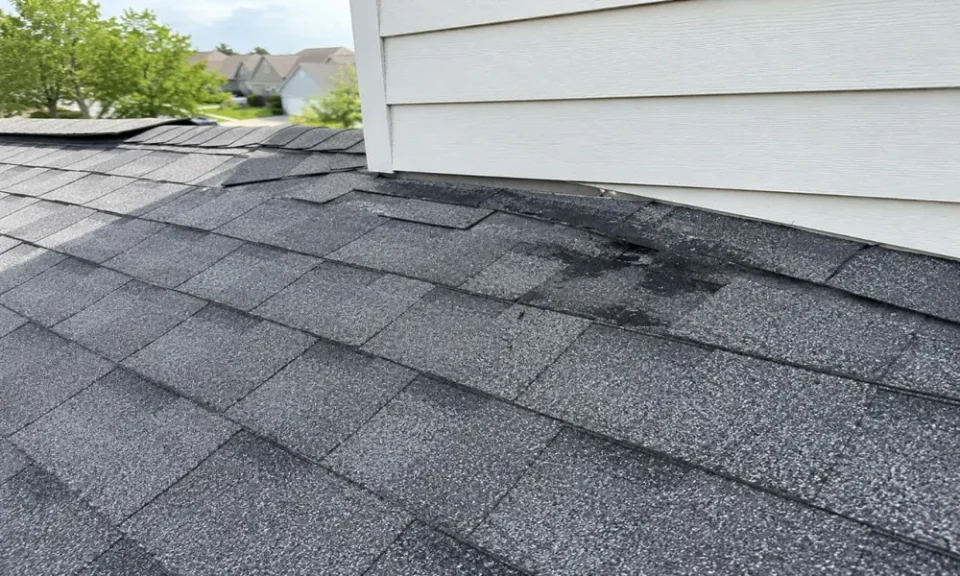
Most hail damage on an asphalt roof doesn’t announce itself. A storm passes, the ceiling stays dry, and the shingles look fine from the driveway. Yet the impacts that matter most often sit beneath the granule surface, inside the fiberglass mat, or along seal strips no one can see from the ground. Those weak points tend to fail later, usually during the next freeze, the next windstorm, or the next long stretch of summer heat.
That delay causes real trouble for homeowners. By the time a stain appears or shingles start sliding into the yard, months have passed, the storm date is hard to pin down, and the policy’s reporting window may be closing. Knowing which slow-developing signs to watch for gives a homeowner a much better chance of catching damage while it’s still clearly tied to a specific storm.
Homeowners who suspect a storm left more behind than it showed can turn to a Montgomery County Roofing Company that treats the adjuster meeting as part of the job. Pure Value Renovations LLC documents hail impacts on site alongside the insurance adjuster so subtle damage makes it into the estimate, then completes storm restoration or a full replacement for homes across Southeast Kansas. When a settlement falls short of the full cost, low monthly payment plans help close the gap. Sending a few photos of a suspicious roof to contact@purevaluerenovations.com is an easy way to get an inspection on the calendar.
1. Granules keep collecting in the gutters weeks later
Some granule shedding right after a storm is expected. The warning sign is shedding that continues long after the storm has passed. Hail loosens the bond between granules and asphalt, so every rain afterward washes more of them into the gutters and downspout outlets.
Those granules are what shield the asphalt from ultraviolet light. Once a spot goes bare, the sun dries out the exposed asphalt and it turns brittle. InterNACHI’s inspection guidance points out that older shingles hold granules less securely than new ones, so even modest hail can strip a roof that was already 12 or 15 years into its life. Check the splash area under downspouts after the first few rains. A growing pile of dark grit is a better clue than anything visible from the ground.
2. Soft bruises that harden into cracks
A fresh hail bruise on a shingle often feels slightly spongy under thumb pressure, like a soft spot on fruit. The granules may still be there, so the mark is easy to miss. Underneath, the impact may have fractured the fiberglass mat.
A fractured mat holds together for a while. Then Kansas winters work on it. Water seeps into the break, freezes, expands, and widens the crack with every freeze and thaw. By spring, a bruise that was nearly invisible in June can become a split that lets water reach the underlayment. Inspectors look for bruises in clusters on the slope that faced the storm, since hail rarely hits all sides of a house equally.
3. Seal strips that let go during the next windstorm
Every architectural or three-tab shingle relies on a factory adhesive strip that bonds it to the course below. Hail driven by strong wind can crack that bond without moving the shingle at all. The roof looks perfectly intact.
The failure shows up during the next strong wind event, when loosened tabs lift, crease, or tear away entirely. Homeowners often blame the wind, and the claim gets filed against the wrong storm. Tabs that flap, creased shingles along the upper courses, and shingles that slide when lightly lifted all point to broken seals. Spotting them early helps connect the damage to the hailstorm that actually caused it.
4. Small stones that add up over several seasons
The National Weather Service treats hail as severe once stones reach 1 inch in diameter, about the size of a quarter. Many homeowners assume anything smaller can’t harm a roof, and for a single storm on a new roof that’s often true.
Repeated small hail tells a different story. A peer-reviewed IBHS study on sub-severe hail exposed shingles to stones under an inch combined with years of outdoor weathering. Shingles worn down that way became roughly ten times more vulnerable to damage from a later large hail event than new products. The small storms stripped granules, sunlight degraded the bare asphalt, and the roof entered the next big storm already weakened. For homes in the hail corridor of Southeast Kansas, a roof that has weathered several “minor” storms deserves a closer look than its age alone would suggest.
5. Cracked pipe boots and dented flashing
Hail damage isn’t limited to shingles. Rubber pipe boots around plumbing vents harden with age, and a direct hit can split the collar. The crack may be hairline at first, opening slowly as the rubber continues to dry out in the sun.
Metal components tell their own story. Dented ridge vents, box vents, chimney flashing, and drip edge are strong evidence of hail size and direction, and adjusters rely on them. Dents in step flashing can also bend the metal enough to open a path for wind-driven rain. Leaks at penetrations often appear months after a storm and get mistaken for an old roof simply wearing out.
6. Attic clues that show up before ceiling stains
Water from a hail-damaged roof usually travels along decking or rafters before it ever reaches drywall. That makes the attic the earliest warning system a homeowner has.
After a heavy rain, a flashlight sweep of the attic can reveal darkened spots on the underside of the decking, damp or matted insulation, and rust forming on nail tips that poke through the sheathing. Musty odors in late summer are another sign that moisture is getting in somewhere. Catching these traces early limits the damage to decking and insulation, and it gives the homeowner dated evidence while the original storm is still easy to identify.
Taken together, these six signs explain why a roof can look healthy one month and fail the next. Hail damage is often a process rather than a single event. Checking gutters, attic spaces, and roof penetrations in the weeks after a storm turns a slow, hidden problem into something that can still be documented and fixed on reasonable terms.
