
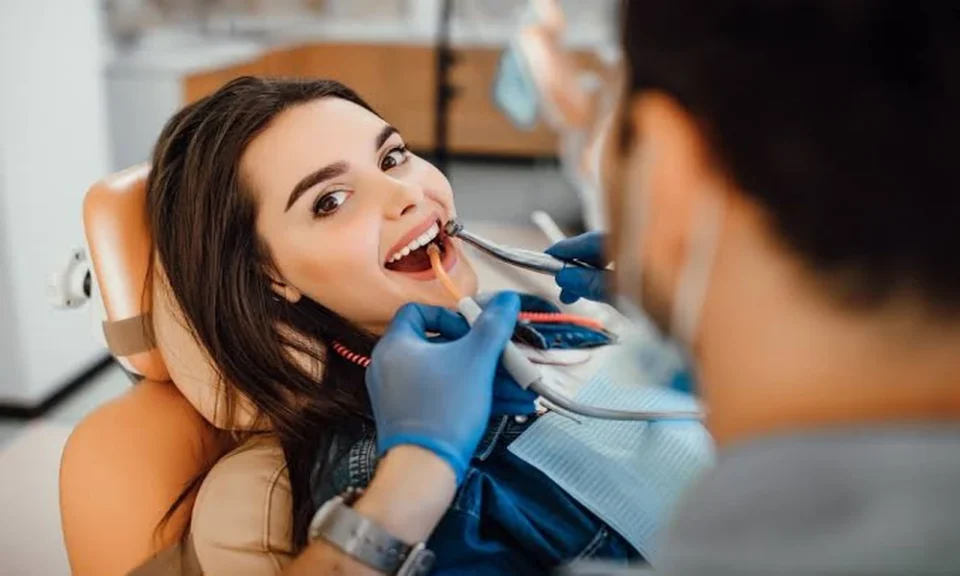
You notice it in small moments first. You chew on one side because the other hurts. You cover your mouth when you laugh. You avoid certain foods, speak a little less clearly, and tell yourself it is manageable, even when it keeps showing up in your day. Dental damage does not stay neatly in one part of your life. It can affect how you eat, how you speak, how you sleep, and how comfortable you feel around other people. Emergency dental care for severe tooth pain in Peachtree Corners.
How restorative dentistry restores both function and confidence comes down to one idea. It repairs what is not working and supports what has been worn down, broken, lost, or ignored for too long. A skilled cosmetic and restorative dentist can rebuild teeth, replace missing teeth, and improve comfort at the same time, so the result is not only a better smile but a mouth that works the way it should.
Restorative dental care addresses more than appearance
When a tooth is cracked, decayed, or missing, the problem rarely stays cosmetic. You may start chewing differently, which can strain your jaw. Nearby teeth can shift into empty spaces. Speech can change. Even a small area of damage can become expensive when it is left alone, because the tooth structure gets weaker and infection becomes more likely.
This is why restorative dental treatment matters. Crowns, fillings, bridges, implants, and dentures are not just about appearance. They help restore bite strength, protect remaining tooth structure, and make daily life feel normal again. If you have been trying to adapt around the problem, that effort can be exhausting. Treatment often removes the need to keep compensating.
Confidence usually returns as function improves. When you can eat without pain and smile without thinking about it, you stop managing every interaction around your teeth. That change is deeply personal. It affects work meetings, family meals, photos, dates, and simple conversations where you no longer feel distracted by discomfort or embarrassment.
A cosmetic and restorative dentist can rebuild comfort in stages
Many people assume they need one dramatic fix, or they worry the damage is too far gone. Often, treatment is more practical than that. A cosmetic and restorative dentist starts with what is failing now, then builds a plan around stability, comfort, and long term health. That may mean replacing an old filling, placing a crown on a weakened tooth, or discussing options for missing teeth such as bridges, implants, or dentures.
If several teeth are involved, the emotional side can be as heavy as the physical side. You may have put off care because of cost, fear, or a bad past experience. That is common. Delay does not mean failure. It usually means life got full, money got tight, or the problem became easy to minimize until it was not. Restorative care meets you where things stand now.
For people missing multiple teeth, learning about dentures and how they restore chewing and appearance can make the choices feel less overwhelming. If surgery is part of the plan, it helps to understand the basics of dental implant procedures and recovery before deciding what fits your needs, budget, and health history.
Different restorative options solve different problems
No single treatment works for every mouth. The right choice depends on how much tooth structure remains, whether the root is healthy, how many teeth are missing, and how much support the surrounding bone and gums can provide. A small cavity may need a filling. A badly damaged tooth may need a crown. A missing tooth may call for an implant or bridge. Several missing teeth may be better managed with partial or full dentures.
| Restorative Option | Best For | Main Benefit | Practical Consideration |
|---|---|---|---|
| Filling | Small to moderate decay | Preserves natural tooth structure | Not enough for large fractures or heavy wear |
| Crown | Weak, cracked, or heavily restored tooth | Protects and strengthens the tooth | Requires shaping of the tooth |
| Bridge | One or more missing teeth | Restores chewing and fills gaps | Uses support from nearby teeth |
| Implant | Single or multiple missing teeth | Acts like a tooth root and supports bone | Needs healing time and adequate bone |
| Dentures | Multiple missing teeth or full arch replacement | Restores appearance and basic function | May require adjustment as the mouth changes |
The value of restorative dentistry is not in choosing the most advanced option. It is in choosing the one that solves your problem reliably and fits your life. A treatment that looks ideal on paper is not ideal if it does not match your health, schedule, or finances.
Small decisions now can prevent larger repairs later
Restoring one damaged tooth often protects several others. When your bite is balanced, you place less pressure on certain teeth. When gaps are filled, neighboring teeth are less likely to drift. When pain is treated early, infection is less likely to spread into the root or gums. This is where dental restoration and confidence meet in a very practical way. You are not only improving how your smile looks. You are reducing the daily friction that keeps reminding you something is wrong.
That matters financially too. A simple repair done early is usually less costly than an extraction, bone loss management, or full replacement later. The longer function is compromised, the more likely the rest of the mouth has to adapt, and adaptation often creates new problems.
Three practical steps you can take right away
1. Write down what is actually bothering you. Be specific. Note pain, sensitivity, chewing trouble, speech changes, loose teeth, missing teeth, and the social moments that make you self conscious. This gives the dentist a clearer picture than “my teeth are bad.”
2. Ask for a phased treatment plan. If the full picture feels expensive or intimidating, ask what needs attention first, what can wait, and which repairs will protect the most function. Many people feel relief once the plan is broken into steps.
3. Compare options by outcome, not just price. Ask how long each option tends to last, how it affects nearby teeth, what maintenance it needs, and how it will feel when you eat and speak. The lowest upfront cost is not always the most affordable over time.
Restoring your smile can restore your footing
Living with damaged or missing teeth can wear on you quietly for years. You adapt, avoid, postpone, and push through. Restorative care changes that by giving you back comfort, strength, and a sense of ease in your own smile. If you are ready to explore your options, schedule a visit with a cosmetic and restorative dentist and take the first step toward a mouth that feels strong, functional, and fully yours again.
